Table of Contents
Understanding the Role of a Pre and Postpartum Personal Trainer
Working with a pre and postpartum personal trainer can help you stay fit safely during and after pregnancy. This specialized fitness professional designs individualized plans that adapt to each stage of your journey.
Before starting any exercise routine, always consult your healthcare provider for clearance. A qualified prenatal personal trainer understands which exercises to modify—for example, avoiding supine positions after the first trimester—while a postpartum personal trainer can adapt routines for safe core recovery. According to NIH pregnancy exercise research, moderate physical activity during pregnancy offers numerous benefits for most women. Safety is paramount, and a knowledgeable trainer ensures every workout is appropriate for your stage.
Please consult a healthcare professional for personalized medical advice before starting any exercise program. Once you have clearance, we are here for you at First Class OBGYN in South Florida to discuss how our Expert Attentive Care supports your prenatal and postpartum fitness.
1. Credentials That Count
Not all trainers are equally qualified for pregnancy and postpartum fitness—that's why a pre and postpartum personal trainer must hold specialized credentials. The NASM personal trainer certification with the Prenatal & Postpartum Specialization covers trimester-specific exercise modifications, postpartum recovery phases, and contraindications like diastasis recti and pelvic floor dysfunction. This advanced training makes them a capable prenatal personal trainer and a compassionate postpartum personal trainer. They learn to adjust intensity, positioning, and exercise selection to protect mother and baby, and are trained to identify red flags and refer clients to their healthcare provider. We believe in Expert Attentive Care, so choosing a trainer with this credential gives you confidence in a safe, evidence-based approach through every stage of motherhood. With the right credentials, a program can be safe, effective, and supportive—let's look at what that entails. Results may vary based on individual patient conditions and circumstances. Please consult a healthcare professional for personalised medical advice.
2. Safe Moves Through Every Trimester
According to the ACOG pregnancy physical activity guidelines, healthy pregnant women should aim for at least 150 minutes of moderate-intensity aerobic activity each week, spread across most days. At First Class OBGYN, we are here to help you stay active safely throughout your pregnancy.
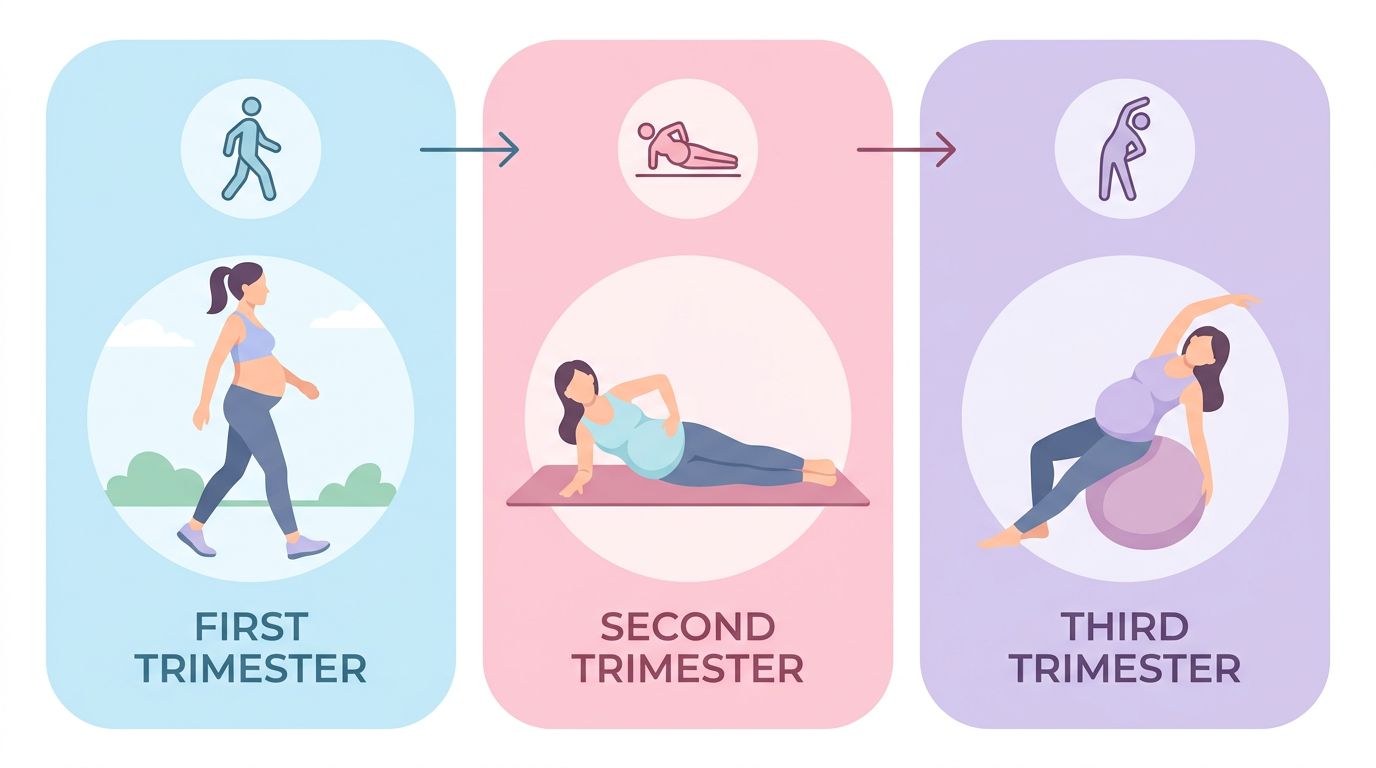
Safe exercise progression across pregnancy trimesters
First Trimester: Focus on low-impact exercises like walking, swimming, or using a stationary bike. If you have no contraindications, it’s safe to start or continue your fitness routine.
Second Trimester: After 16–20 weeks, avoid exercises lying flat on your back. Modify core work to side-lying or seated positions, and emphasize strengthening your pelvic floor and postural muscles.
Third Trimester: Continue as tolerated, but reduce intensity. Avoid high-impact activities, contact sports, or exercises with a fall risk. Add gentle stretching and breathing exercises. Stop exercising and contact us immediately if you experience vaginal bleeding, dizziness, chest pain, contractions, or fluid leakage.
Working with a prenatal personal trainer can help you build a safe, evolving routine. And when you’re ready, a postpartum personal trainer can support your return to fitness. These trimester-appropriate moves lay the foundation for a healthy postpartum recovery. Always consult your healthcare provider before starting or changing an exercise program.
3. Rebuild Stronger After Birth
After childbirth, rebuilding strength safely is a top priority. ACOG recommends waiting until your six-week postpartum checkup for moderate exercise, but gentle pelvic floor work may begin earlier with approval. Our postpartum fitness program online accommodates all fitness levels and can begin after medical clearance. A dedicated pre and postpartum personal trainer helps you navigate this recovery phase with confidence.
We focus on core stability, posture, and energy. Starting with diaphragmatic breathing and Kegels, your postnatal fitness coach gradually introduces low-impact cardio and controlled strength training to address diastasis recti and boost mood. Just as a prenatal personal trainer preps your body pre-birth, a postpartum personal trainer helps you regain function and confidence. We'll guide you at your own pace and are committed to helping women restore their confidence with Expert Attentive Care.
Ready to start? For detailed timing guidelines, visit our FAQ page, and explore our beginner’s guide for a step-by-step plan. Contact First Class OBGYN today. We are here for you. Results may vary; consult a healthcare professional for personalized advice.
4. Online Coaching That Really Works
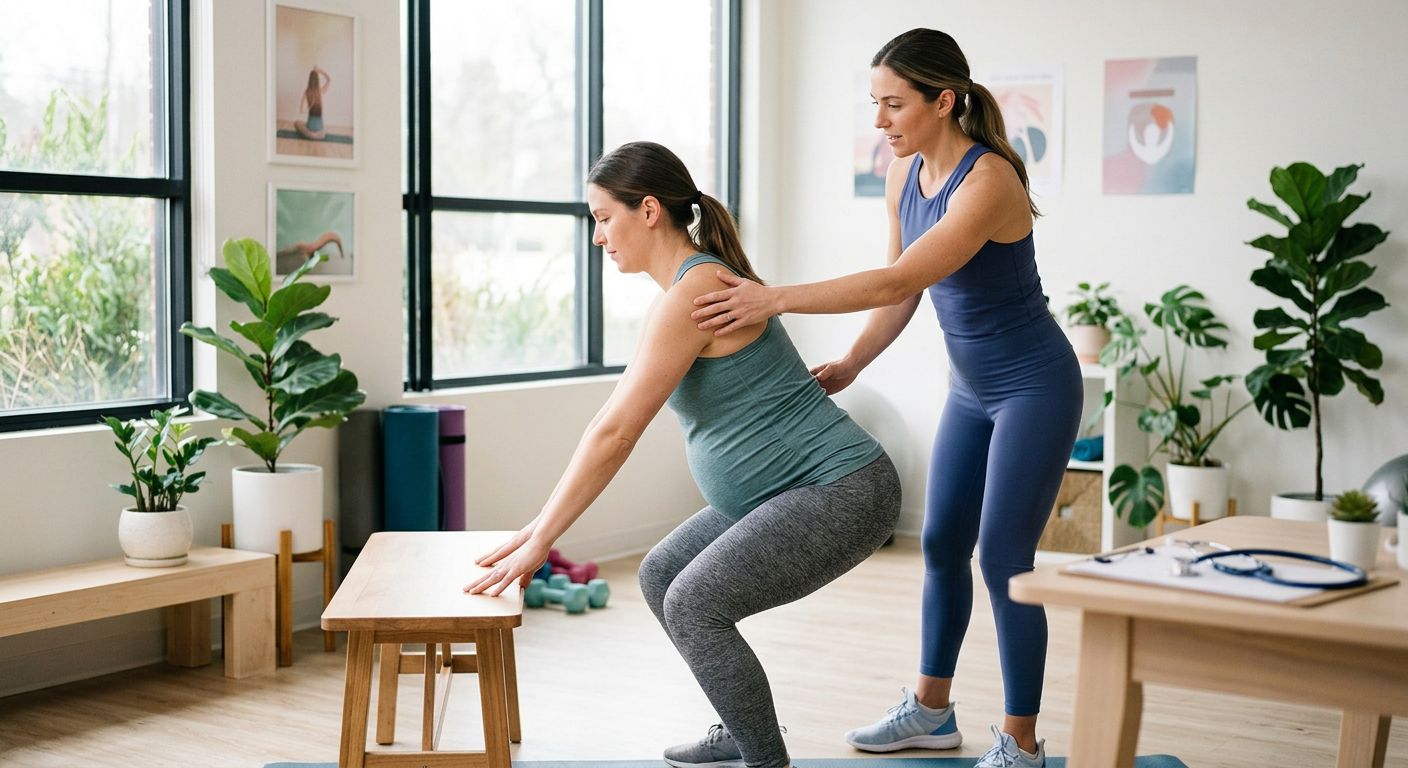
Working with a pre and postpartum personal trainer gives you access to expert-led fitness guidance that adapts to your body's changing needs without ever leaving home. Our postpartum fitness program online is built around exercises that respect pelvic floor healing and diastasis recti recovery, so you can rebuild strength safely.
As Gynecologist Hashtag notes, safe postpartum exercise selection is essential for avoiding injury and supporting long-term recovery. A prenatal personal trainer can help you maintain fitness during pregnancy, while a postpartum personal trainer focuses on restoring core function, improving energy, and rebuilding confidence after childbirth. We combine that clinical awareness with Expert Attentive Care, offering a structured virtual program that fits around feeding schedules and nap times.
We are always here for you with an approach that blends professionalism and warmth, helping you feel strong and supported every step of the way.
5. Specialized Care for Diastasis Recti
For women dealing with diastasis recti, working with a pre and postpartum personal trainer can make a significant difference. Fortunately, specialized care options exist to help you heal, and First Class OBGYN provides comprehensive support throughout South Florida.
We emphasize Expert Attentive Care by designing personalized treatment plans that often begin with physical therapy and core rehabilitation. A prenatal personal trainer can help prevent diastasis recti during pregnancy through proper exercise guidance. For those already postpartum, a postpartum personal trainer designs safe, targeted exercises to support healing. As a convenient resource, we recommend our postpartum fitness program online, a structured program detailed in our blog that provides guided, at-home routines.
We invite you to schedule a consultation to assess your diastasis recti and receive a tailored recovery plan. While results vary, consistency with a professional program is key to improvement. We are Committed to helping women restore their confidence through Expert Attentive Care.
6. Cost and How to Find the Right Trainer
Once you understand the benefits, the next step is finding a trainer who fits your budget and needs. Working with a pre and postpartum personal trainer is an investment in your health during a transformative time, and it helps to know what to expect.
Costs can vary widely. In South Florida, you might find sessions ranging from $40 to over $100, depending on whether the trainer comes to your home, works in a studio, or offers virtual sessions. Trainers with specialized credentials, such as a prenatal personal trainer certification, often charge a premium—but that expertise can help you exercise safely. When considering a postpartum personal trainer, we recommend asking about package deals, multi-session discounts, and whether they offer a free initial consultation so you can gauge the fit without a large upfront commitment.
In addition to nationally recognized certifications from organizations like NASM or ACE, look for advanced training as a Prenatal/Postnatal Specialist. It is also wise to ask about their experience with common postpartum conditions like diastasis recti or pelvic floor recovery. Scheduling a consultation, whether in-person or virtual, gives you the chance to assess their communication style, safety approach, and overall comfort level before committing. We are here for you, and we encourage you to invest in your well-being with confidence during this special time.
Partner with First Class OBGYN for Your Fitness Journey
If you’re looking for a pre and postpartum personal trainer, consider partnering with First Class OBGYN for medical oversight of your fitness journey. Beyond routine pregnancy care, your fitness journey matters too — and having expert guidance makes all the difference.
According to the American College of Obstetricians and Gynecologists (ACOG), physical activity in pregnancy and the postpartum period has minimal risks and proven benefits for most women. Our board-certified gynecologists provide personalized exercise advice tailored to your health history, pregnancy stage, and recovery status. We offer initial consultations to discuss safe workout guidance and postpartum exercise plans that align with your goals. We are here for you — talk to us about your fitness goals at your next appointment.
Please consult a healthcare professional for personalised medical advice and diagnosis.
Resources
- Find Safe Postpartum Exercises in Online Fitness Guides
- Learn When to Start an Online Postpartum Fitness Program
- Get Complete Guide to Online Postpartum Fitness Program
- Get Complete Guide to Hormonal Acne Treatment
- Learn Symptoms and Causes of Hormonal Acne
- Discover How to Treat Hormonal Acne Effectively
- Find Vaginal Rejuvenation Near Me with Fast Results
- Get Accredited NASM Personal Trainer Certification
- Get ACOG Pregnancy Physical Activity Guidelines Online
- Discover NIH Pregnancy Exercise Research and Guidelines